Skip to main content


The Risk Sitting Quietly Inside Many Businesses
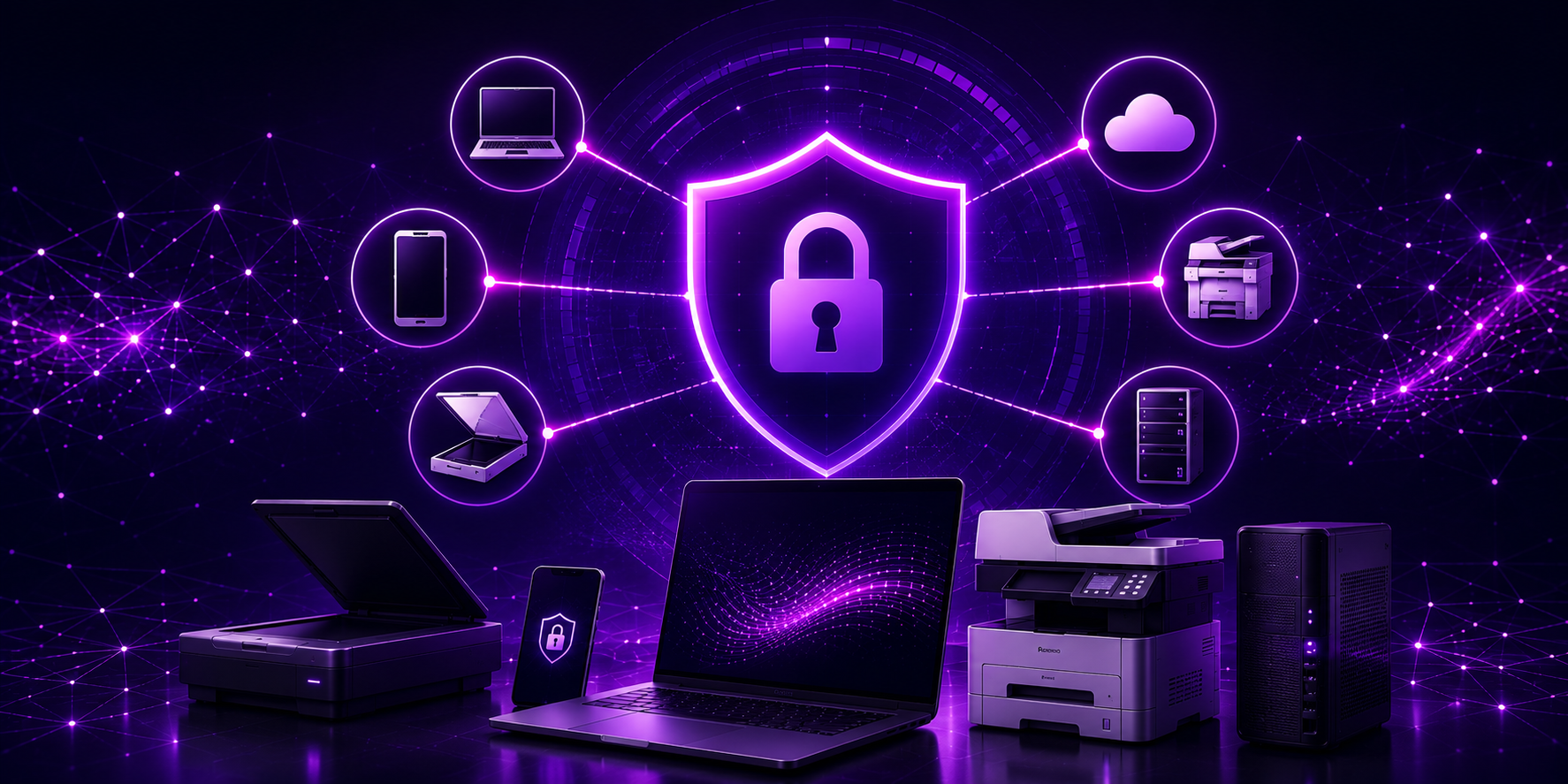
When businesses discuss cybersecurity, the focus often lands on email threats, passwords and firewalls. Those areas matter, but many organisations still underestimate the number of devices connected to their environment that create exposure every single day. Every laptop, mobile phone, printer, scanner and connected device creates a route into the network and, as businesses continue adopting cloud platforms, hybrid working and connected technologies, the number of endpoints needing protection keeps growing alongside the complexity of managing them properly.
A company laptop used from home, a personal mobile phone accessing Microsoft 365, a multifunction printer connected to cloud workflows or a document scanner processing confidential information are all endpoints within the modern workplace. Across many organisations, some of these devices are sitting outside proper monitoring, patching or security oversight, particularly where businesses have grown quickly, introduced hybrid working or inherited older infrastructure over time.
Staying Ahead of Endpoint Threats in Evolving IT Environments
Cyber criminals understand this well. They do not always need highly sophisticated methods when poorly managed devices already provide opportunities to gain access, steal credentials or move across systems undetected. This is one of the reasons endpoint security has become such an important area of focus for IT teams, particularly as businesses become more reliant on connected systems and remote access.
Visibility across the wider environment matters because businesses need confidence that devices are properly managed, security updates are being maintained and suspicious behaviour can be identified before it develops into something more serious. The challenge is that many endpoint risks are easy to overlook during day to day operations, especially in busy environments where technology estates naturally evolve over time.

Looking Beyond Traditional Endpoints
Printers are a good example of this. Modern multifunction devices are effectively network computers that store information, connect to cloud platforms, process scanned documents and often contain user authentication or email integration. Despite this, printers are still frequently excluded from wider endpoint security discussions. The same applies to document scanners, warehouse devices, remote user equipment, legacy hardware and personal devices used for business access.
As organisations grow, inconsistencies naturally appear. Different departments introduce different technologies, remote working expands access points and older devices remain operational because replacing them has not yet become a priority. None of this is unusual, but it does reinforce the importance of understanding where potential vulnerabilities exist and having a plan to manage them properly before they become a larger operational or security concern.
At FUTERA, this forms a key part of our IT Health Check process. We work with organisations to review the wider technology environment, helping identify areas that may expose the business to unnecessary operational or cyber risk. That includes endpoint security, infrastructure, backup resilience, print environments, patch management, user access, cloud readiness and broader technology performance.

For many businesses, the value comes from gaining a clearer picture of the environment they already have. In some cases, organisations discover unsupported devices still connected to the network, while in others, security policies may not be applied consistently across remote users or older infrastructure. Sometimes the challenge is simply visibility, where internal teams do not have the time or resource to continuously monitor every area effectively while also supporting users and maintaining day to day operations.
Alongside endpoint management, businesses are increasingly looking for reassurance that threats are being actively monitored as cyber risks continue evolving. FUTERA’s Security Operations Centre (SOC) services help provide that additional oversight through continuous monitoring and proactive threat visibility, helping organisations detect suspicious activity earlier and respond faster where issues arise. That added visibility gives businesses greater confidence that somebody is actively watching over the environment while internal teams remain focused on supporting users, customers and the wider business.
Strong cyber resilience comes from understanding the full picture across the technology environment and maintaining consistency across the systems, devices and users that support the organisation every day. Endpoints sit at the centre of that picture because they connect people, systems, data and business operations together continuously throughout the working day.
Gain Greater Visibility Across
Your IT Environment
FUTERA’s IT Health Check helps organisations identify hidden risks across their IT, endpoint, print and security environments, providing practical recommendations to improve resilience, visibility and protection.
Let Us Help